


- 15 Views
- 2 Min Read
- (0) Comment

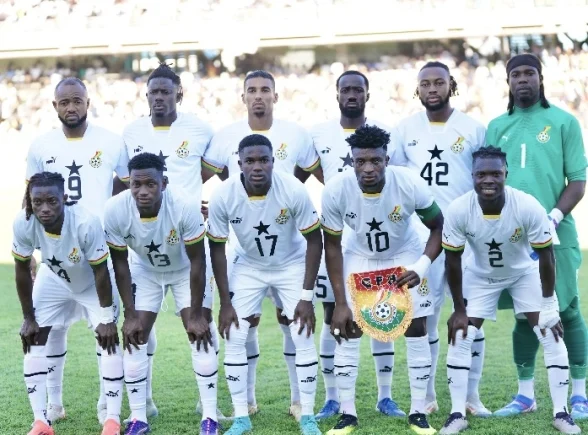
The Black Stars reached the World Cup knockout rounds for the first time since 2010. A young, injury-hit side made the whole nation stand tall in North America — and the future looks even brighter than the final scoreline.
For sixteen years, Ghana carried the ache of Soccer City — that 2010 quarter-final in South Africa, agonisingly lost on penalties to Uruguay. At the 2026 FIFA World Cup, co-hosted by the United States, Canada and Mexico, the Black Stars finally returned to the knockout stage and reminded the world exactly why the black star on our flag matters.
It was never going to be easy. Ghana were drawn into a brutal Group L alongside England, Croatia and Panama. They opened with a disciplined 1-0 win over Panama, then held tournament heavyweights England to a goalless draw — a result that stunned the pundits. A narrow 1-2 defeat to Croatia followed, but four points and a third-place finish were enough to advance under the expanded 48-team format, as one of the best third-placed teams.
That the team got there at all was remarkable. Just weeks before the tournament, the Ghana Football Association replaced Otto Addo with veteran Portuguese coach Carlos Queiroz, a man at his fifth straight World Cup. Talisman Mohammed Kudus — whose goal had sealed qualification — was ruled out through injury. In his absence, captain Jordan Ayew, the pace of Antoine Semenyo and Iñaki Williams, and the composure of Thomas Partey carried the load.
The Round of 32 brought Colombia to Arrowhead Stadium in Kansas City on Friday, 3 July. Jhon Arias struck early, in the 14th minute, and though goalkeeper Lawrence Ati-Zigi produced several fine saves to keep Ghana in it, the Black Stars could not find a way through a well-drilled Colombian defence. Colombia won 1-0, and Ghana’s campaign came to a close.
But look past the scoreline. This was a side with an average age around 26, two clean sheets in the group phase, and a defensive resilience few expected after such upheaval. Ghana did not simply make up the numbers — they competed, and they belonged. That is a foundation, not an ending.
The black star has always stood for African freedom, carried onto the biggest stage in world sport. The disappointment of Kansas City will fade; the pride of a nation that stood tall again will not. With this young core and eyes already turning to the next Africa Cup of Nations, the Black Stars will be back. Ayekoo to the team — and Akwaaba to every fan who believed.