
- 238 Views
- 2 Min Read
- (0) Comment
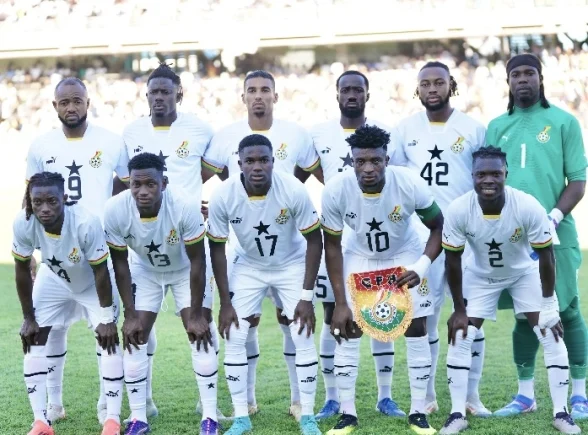
Ghana qualified for the 2026 FIFA World Cup for the fifth time, drawn into Group L alongside England, Croatia, and Panama. Here’s what it means for the nation — and for the country’s booming sports tourism.
On a charged October evening at the Accra Sports Stadium, Ghana’s Black Stars sealed their place at the 2026 FIFA World Cup with a 1–0 victory over Comoros. The stadium erupted. Across social media, across the diaspora, and in the streets of Accra, Kumasi, Tamale, and Takoradi, a nation celebrated together. For the fifth time — and the fourth in the last six tournaments — Ghana would be on football’s biggest stage.
The qualification campaign was commanding. Ghana topped their African qualifying group — Group I — with 25 points from a possible 30, netting 23 goals across 10 matches. Among their results was a stunning 5–0 demolition of Central African Republic, in which Thomas Partey scored from long range, Jordan Ayew registered a goal and two assists, and Mohammed Kudus orchestrated from the centre. The Black Stars finished three points ahead of second-placed Madagascar, leaving no doubt about who belonged at the top of the table.
FIFA President Gianni Infantino personally congratulated Ghana, writing that the Black Stars’ fans ‘will bring colour, style and passion to the greatest FIFA World Cup ever in 2026.’ President John Mahama urged the team to draw inspiration from Morocco’s 2022 semi-final run — the first by an African nation — as a reminder of what West African football can achieve on the global stage.
The 2026 World Cup, co-hosted across the United States, Canada, and Mexico in an expanded 48-team format, begins in June 2026. Ghana were drawn into Group L alongside England, Croatia, and Panama. The group presents a genuine opportunity for the Black Stars to advance beyond the group stage, which has been their stumbling block in their last two appearances. Head coach Otto Addo will look to Antoine Semenyo and Mohammed Kudus — two of the Premier League’s most electric wide players — to supply the spark in matches that will be watched by billions.
For Ghana’s tourism and hospitality sectors, the implications of World Cup qualification extend well beyond football. Experience from previous tournaments shows that a Ghanaian World Cup appearance drives a spike in diaspora interest, flight bookings to Ghana, and a surge in national pride content that translates directly into tourism enquiries. Hotels, tour operators, and experience providers in Ghana are already preparing for the ‘World Cup effect’ — the wave of visibility that comes when the Black Stars step onto the pitch in front of a global audience.
Ghana’s most iconic World Cup moment remains the 2010 quarter-final in South Africa, when a Suarez handball and a missed penalty by Asamoah Gyan denied the Black Stars a historic semi-final place. Sixteen years later, a new generation has the chance to write a different ending. For those who have always wanted to visit Ghana, there has never been a better time to be part of the story.